


Value betting transforms card markets from gambling into systematic opportunity exploitation. Rather than simply predicting which matches will produce cards, value betting focuses on finding mispriced odds where bookmaker assessments underestimate true card probability. This distinction matters because consistent profits require not just correct predictions but predictions that beat the implied probability embedded in available odds. Understanding how to identify, calculate, and exploit value in card betting markets creates sustainable edge that casual bettors never achieve.
The concept of value applies to card betting exactly as it applies to other markets. When you believe a match has 60% probability of exceeding 3.5 total cards, but bookmaker odds imply only 50% probability, you’ve identified potential value. If your probability assessment is accurate, betting at those odds produces long-term profit regardless of individual match outcomes. Value betting accepts that any single bet might lose while ensuring aggregate results trend positive when your probability estimates prove reliable.
Card betting offers particularly rich value-hunting territory because bookmakers devote less analytical attention to discipline markets than to main match odds. The sheer volume of matches and markets means some fixtures receive minimal individual assessment, with odds generated algorithmically from historical averages. These algorithmic odds don’t capture fixture-specific factors—referee assignment, team matchups, rivalry intensity—that human analysis can identify. This attention gap creates persistent value opportunities for bettors willing to do the work bookmakers skip.
Calculating Expected Value
Expected value quantifies whether a bet offers positive long-term return. The calculation is straightforward: multiply your estimated probability by the potential return, then subtract the probability of loss. If the result is positive, you’ve found a value bet. If negative, the bookmaker holds the edge regardless of your prediction’s accuracy.
For a practical card betting example, suppose you estimate 55% probability that a match produces over 3.5 cards, and the bookmaker offers odds of 2.0 (implied probability 50%). Your expected value calculation: (0.55 × £10 potential profit) – (0.45 × £10 stake lost) = £5.50 – £4.50 = £1.00 expected profit per £10 wagered. This 10% expected return represents genuine value worth capturing.
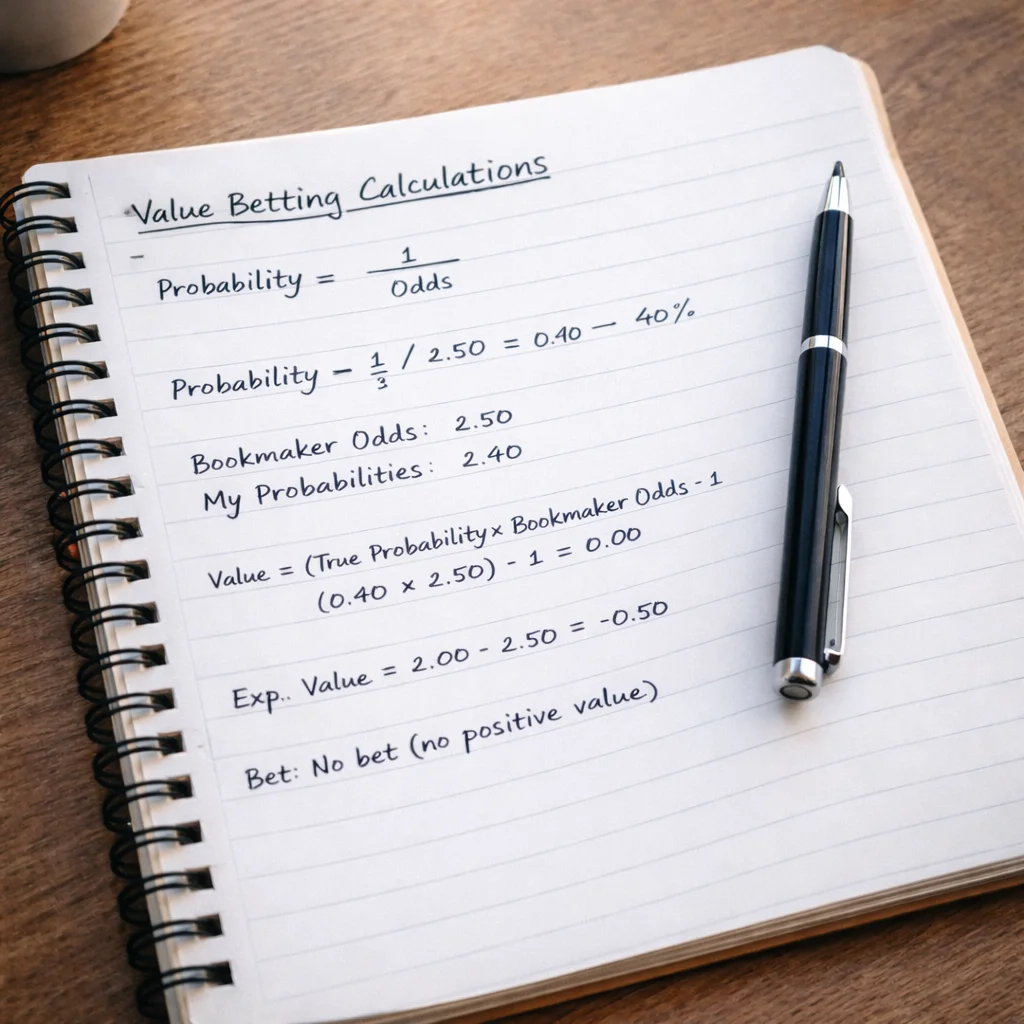
The challenge lies in accurate probability estimation. Bookmakers employ sophisticated models refined across millions of data points. Believing you’ve identified value requires confidence that your assessment captures factors their models miss. This confidence should derive from systematic analysis—referee tendencies, team discipline patterns, fixture-specific research—rather than intuition or wishful thinking.
Where Card Market Inefficiencies Exist
Referee assignments represent the most reliable source of card betting value because bookmaker models often underweight officiating impact. When a strict referee handles a fixture involving physical teams, the combination produces elevated card probability that generic models miss. Your referee database—tracking cards per match, first-card timing, and team-specific patterns—provides information advantage that systematic exploitation can convert to profit.
Fixture-specific factors create value when unusual circumstances affect card probability without bookmaker recognition. A rivalry match between teams with recent contentious history, a relegation battle where desperation will drive tactical fouling, or a match where key disciplinary targets face specific opponents—these situations elevate card probability above what historical team averages suggest.
Lower-profile fixtures receive less bookmaker attention than high-profile matches, creating wider efficiency gaps. A Premier League match between top clubs attracts significant betting volume and correspondingly careful odds-setting. A League One match or an early Champions League qualifier receives far less scrutiny. These overlooked fixtures often contain value that high-profile markets have been arbitraged away.
Developing Your Probability Model
Building probability estimates for card betting requires combining multiple information sources into coherent assessments. Start with baseline expectations from team discipline averages and league card rates. Layer referee tendencies when assignments become known. Add fixture-specific adjustments for rivalry intensity, match stakes, and tactical matchup factors. The goal is synthesising all relevant information into a single probability estimate you can compare against offered odds.
Tracking your historical accuracy helps calibrate future estimates. If you consistently overestimate card probability—if matches you rated at 60% actually hit only 50% of the time—adjust your methodology to correct the bias. Conversely, consistent underestimation suggests more aggressive betting on your identified opportunities. This calibration process requires recording your probability estimates alongside outcomes across hundreds of predictions.
Closing line value provides feedback on your assessment quality. When you bet early and the line moves toward your position before kickoff, sharp money agrees with your assessment. Consistently beating the closing line—getting better odds than final prices—indicates genuine edge. If lines consistently move against you, bookmakers or sharp bettors see something your analysis misses.
Comparing Your Assessment to Market Prices
Value identification requires converting odds to implied probability for comparison against your estimates. Decimal odds of 2.0 imply 50% probability; 3.0 implies 33%; 1.5 implies 67%. Subtract your estimated probability from the implied probability—if yours is higher, you’ve potentially found value.
However, bookmaker margins complicate this comparison. Unlike theoretical true odds, bookmaker prices include profit margin that reduces your expected return. The margin varies by bookmaker and market but typically ranges from 5-10% for card betting markets. Account for margin when assessing value—a small edge might disappear once margin is incorporated, while larger edges remain profitable.
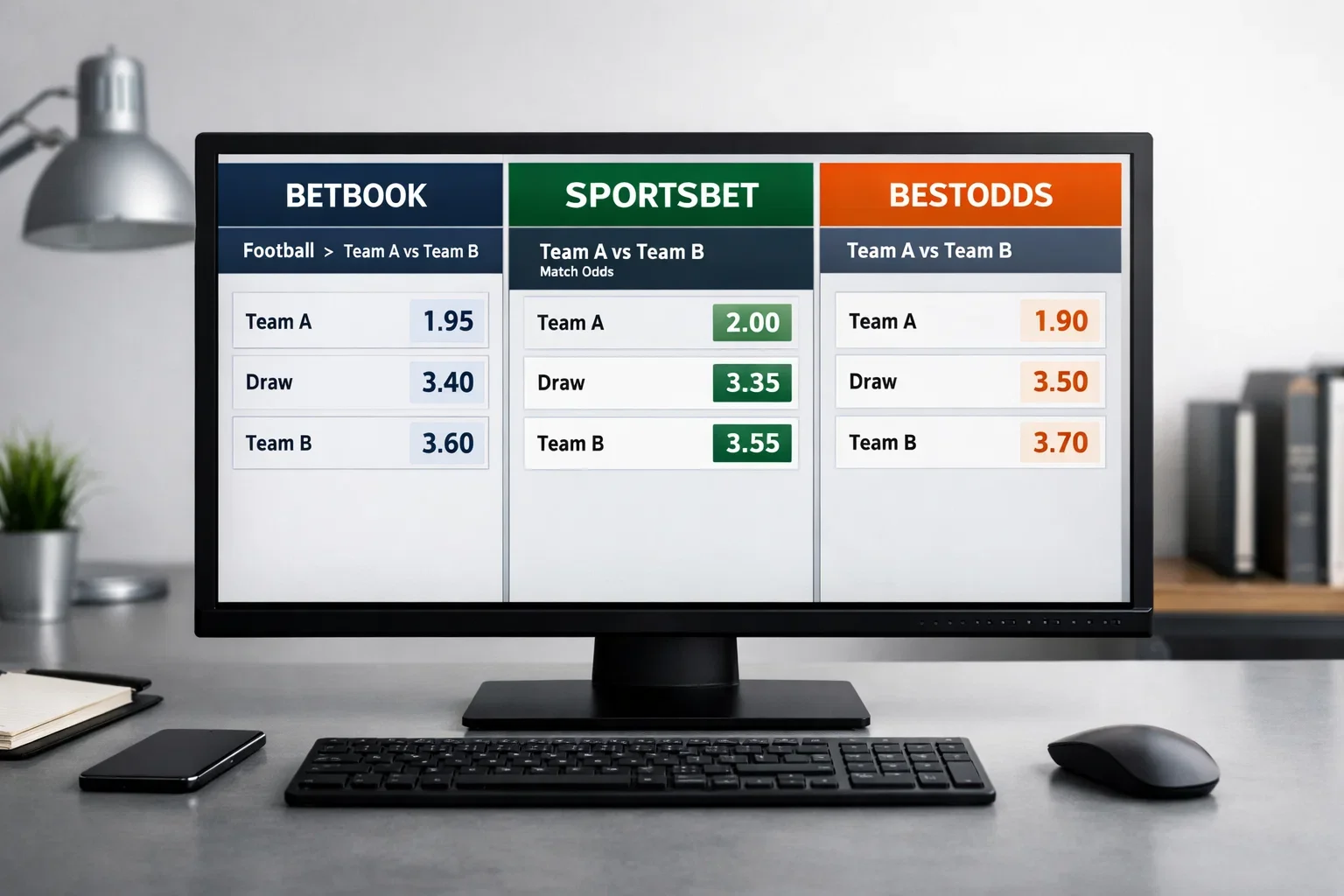
Line shopping across multiple bookmakers increases the odds of finding value and the magnitude of value when found. One bookmaker might offer over 3.5 cards at 1.8 while another offers 2.0. If your analysis suggests value exists, finding the best available price maximises that value. Maintaining accounts across multiple bookmakers and checking prices before betting should become habitual.
Avoiding False Value
Not all apparent value is genuine. Several traps capture bettors who believe they’ve found edge when they’ve actually found noise or bias. Understanding these traps protects against betting on imagined value that costs money rather than generating it.
Recency bias causes overweighting of recent results that represent temporary variation rather than fundamental shifts. A team that received many cards in their last three matches might regress toward their longer-term average rather than continuing the pattern. Similarly, a referee’s recent strict matches might represent noise rather than changed approach. Balance recent data against larger sample sizes to avoid spurious patterns.
Confirmation bias leads bettors to find supporting evidence for conclusions they’ve already reached while ignoring contradicting information. If you want a match to produce cards, you’ll find reasons to support that prediction while dismissing factors suggesting otherwise. Systematic analysis with predetermined criteria helps counter this tendency by forcing consistent evaluation regardless of initial intuition.
Public sentiment sometimes creates false value when widespread casual betting moves odds away from true probability. However, assuming public sentiment is always wrong represents its own form of bias. Sharp money often agrees with public positions; contrarianism for its own sake doesn’t constitute analysis.
Exploit aggressive derby matches odds.
Implementing Value Betting Practice
Pre-match preparation should produce explicit probability estimates before checking available odds. Write down your assessment, then compare against the market. This sequence prevents anchoring bias where available prices unconsciously influence your probability estimate. Your goal is independent analysis that identifies when markets have erred, not post-hoc justification for betting positions you want to take.
Selectivity matters because value opportunities don’t exist in every fixture. Many matches feature accurately priced card markets where neither overs nor unders offer edge. Forcing bets when value is absent destroys expected returns generated when genuine opportunities appear. Passing on accurately priced markets requires discipline but preserves bankroll for productive deployment.
Document your reasoning for each bet to enable post-hoc review. When matches resolve, review whether your analysis correctly identified the factors that influenced outcomes. This feedback loop improves future analysis by revealing blind spots, biases, and effective approaches. Value betting skill develops through this iterative learning process, not through intuitive guessing that never receives correction.
Finding value in card betting markets requires analytical rigour that most bettors never develop. By building probability models, comparing systematically against market prices, and maintaining discipline about when genuine value exists, you can identify persistent edge in discipline markets. The work required deters casual bettors—which is precisely why the opportunity persists for those willing to invest the effort.
Protect the invested money strictly on card bet.
