


Not all bookmakers serve card bettors equally. Market depth, odds competitiveness, settlement rules, and special features vary substantially across platforms, making bookmaker selection genuinely important for discipline market specialists. The bookmaker offering the best Premier League match odds might provide limited card markets or poor prices on discipline bets. Conversely, bookmakers with comprehensive card market coverage sometimes lack competitive pricing on mainstream markets. Understanding these tradeoffs helps you select platforms that optimise your card betting returns.
Multiple bookmaker accounts provide essential advantages for serious card bettors. Line shopping across platforms captures best available prices, adding percentage points to long-term returns. Different bookmakers offer different market types—one might specialise in booking points while another provides better player-to-be-booked coverage. Account diversification also protects against individual bookmaker limitations, whether stake restrictions, account closures, or temporary market suspension.
Evaluate bookmakers across several dimensions before committing your card betting activity. Market availability matters—does the platform offer the specific card markets you target? Odds competitiveness affects every bet you place. Settlement rules determine how edge cases resolve. User interface affects efficiency of finding and placing bets. Promotional offers might supplement returns. Each dimension deserves consideration in platform selection.
Market Depth and Availability
Leading bookmakers differ substantially in card market coverage. Some offer only basic total cards over/under lines, while others provide booking points, first card, team cards, player to be booked, card handicaps, and half-specific variants. Your betting strategy determines which markets you need—if you specialise in player bookings, a bookmaker lacking this market type offers limited value regardless of other features.
Lower-league and international coverage varies more than top-flight availability. Most major bookmakers cover Premier League card markets comprehensively, but Championship, League One, or continental league coverage differs substantially. If your edge exists in less-covered competitions, verify that prospective bookmakers actually offer markets for your target fixtures before prioritising them based on top-flight features.
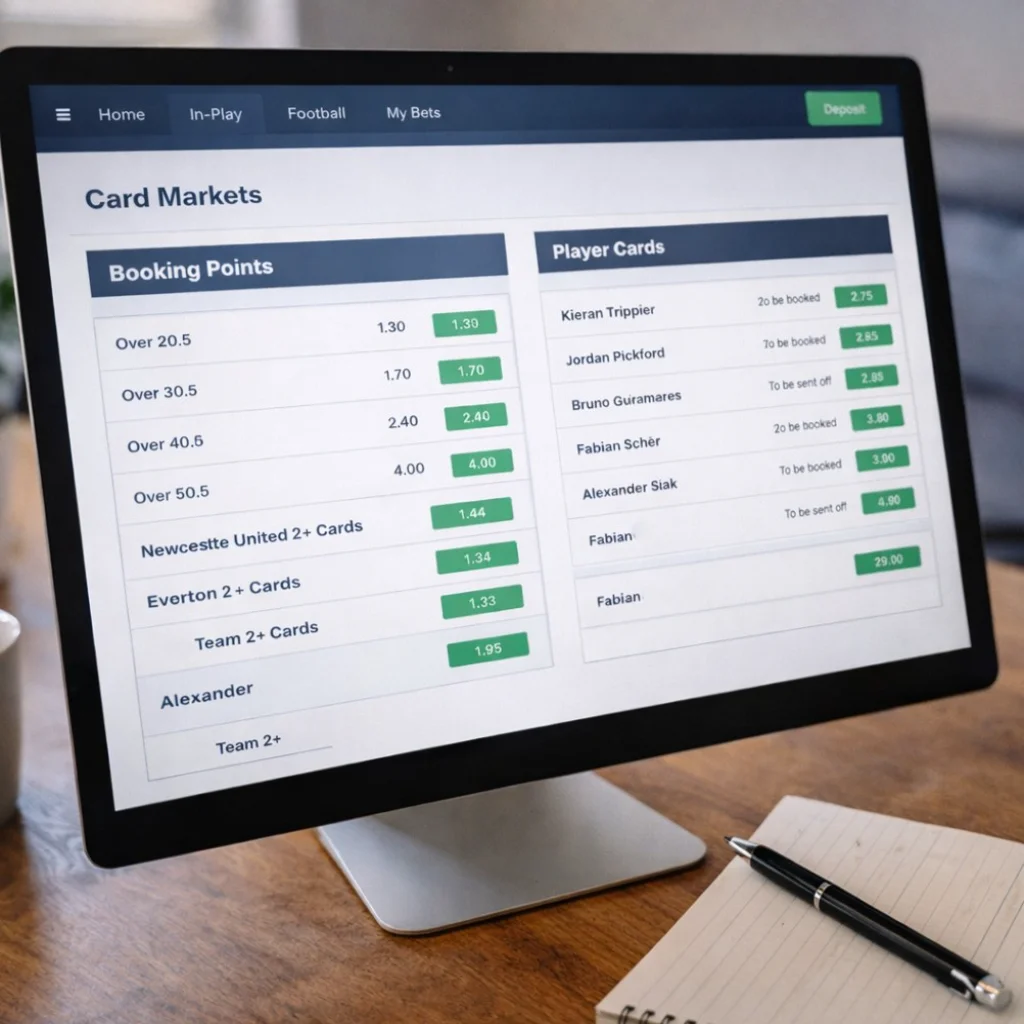
Market timing—when card lines become available before matches—affects bettors who want early access. Some bookmakers post card markets days before fixtures while others wait until matchday or even closer to kickoff. Early availability matters if your strategy involves capturing value before markets sharpen, while later availability might suit bettors who prefer final lineup confirmation before betting.
Odds Competitiveness
Price comparison across bookmakers reveals persistent differences in card market pricing. One bookmaker might consistently offer better overs odds while another provides stronger unders prices. These patterns enable strategic account usage—betting overs at one platform and unders at another maximises returns across both sides of the market.
Margin levels in card markets typically exceed those in main match odds. Bookmakers accept wider margins on secondary markets like cards because betting volume is lower and price-sensitive bettors are fewer. However, margin varies by bookmaker—some maintain competitive card pricing while others extract substantial margin from discipline markets. Regular price comparison identifies which platforms offer better value.
Player-to-be-booked odds show particular variation because bookmaker assessment of individual player card probability differs substantially. One platform might offer 5/1 on a defensive midfielder getting booked while another offers 7/1 on the same player in the same match. These gaps represent real value differences that line shopping captures.
Settlement Rules and Edge Cases
Card betting settlement involves more edge cases than goals markets because discipline situations can be ambiguous. Different bookmakers handle these edge cases differently, making settlement rules genuine selection criteria. The bookmaker offering slightly worse odds but clearer rules might prove preferable to one with better odds but problematic settlement practices.
Cards shown after the final whistle present common settlement questions. Most bookmakers settle on 90-minute cards only, excluding anything shown during post-match confrontations. However, some include all cards shown before players leave the pitch. Cards shown during the interval between normal time and extra time create similar ambiguity. Know your bookmakers’ positions on these scenarios before encountering them.
VAR-related bookings have created new settlement questions. When a yellow card is upgraded to red after video review, how does this affect booking points? When a goal is overturned but the prior card stands, does the card still count? Bookmaker approaches vary; verify that your platforms’ rules align with your expectations for these modern scenarios.
Special Features and Promotions
Some bookmakers offer enhanced odds or profit boosts on card markets that supplement standard returns. While relying on promotions isn’t a strategy, capturing available offers on bets you’d place anyway adds marginal value. Track which platforms regularly promote card markets and factor this into your account activity allocation.
Cash-out availability on card bets varies by bookmaker and market type. If your strategy involves live betting or position management, cash-out functionality matters. Some platforms offer full and partial cash-out on card markets; others restrict or exclude these markets from cash-out options. Verify availability before assuming you can manage positions mid-match.
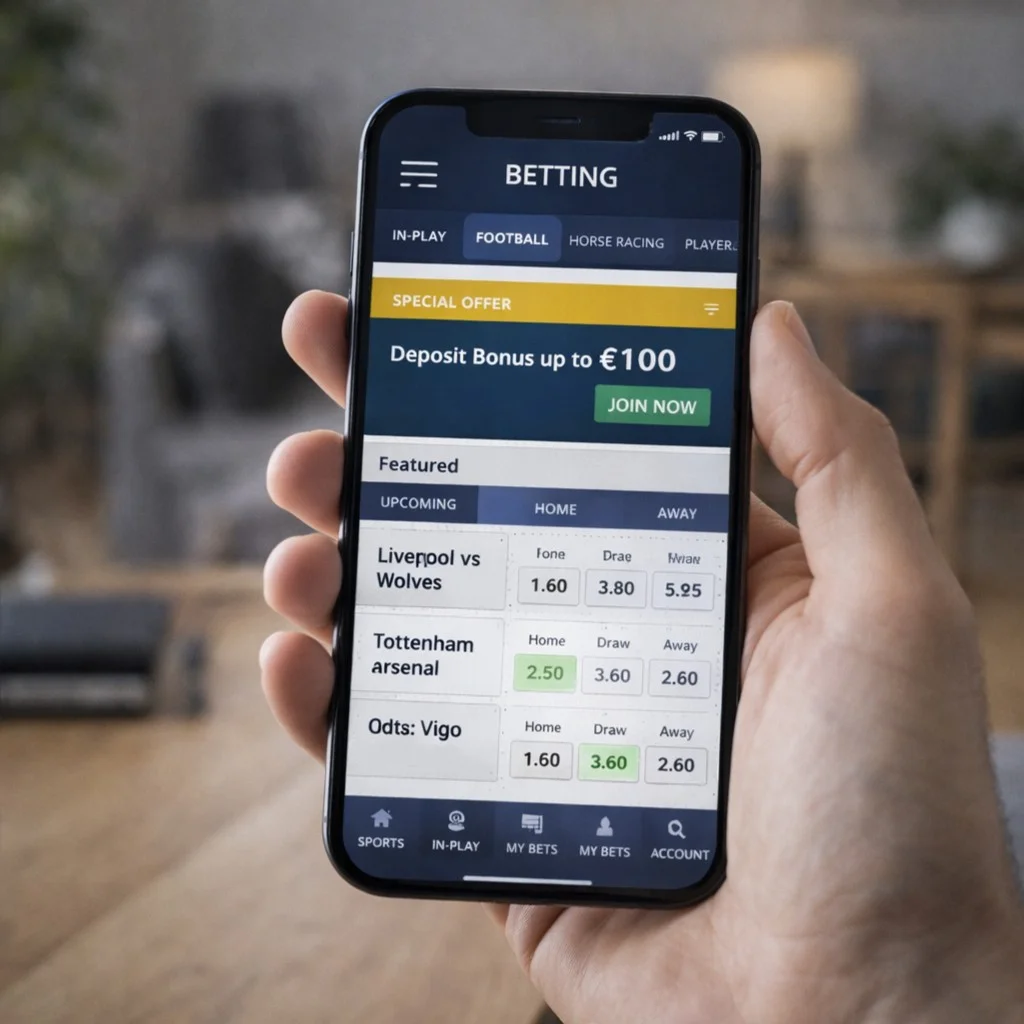
Bet builder flexibility affects card betting when you want to combine discipline selections with other match markets. Some bet builders allow extensive card selection combinations; others limit which card markets can be included. If multi-selection betting features in your approach, test bet builder functionality before committing to platforms.
User Experience Considerations
Finding card markets efficiently matters when betting volume increases. Some bookmaker interfaces bury discipline markets behind multiple navigation steps; others present them prominently. Mobile app functionality affects bettors who place bets away from desktop setups. Test how easily you can locate, evaluate, and bet card markets on prospective platforms before committing significant activity.
Live betting interface quality affects in-play card betting particularly because speed matters when odds move rapidly. Clunky interfaces that lag or require excessive confirmation steps cost money when prices shift during navigation. Platforms with streamlined live betting processes enable faster execution that captures available value before markets adjust.
Statistical integration within betting interfaces helps card bettors who want quick reference access. Some bookmakers display recent team card statistics, referee information, or player discipline records alongside betting markets. This integrated information saves time compared to switching between betting platforms and external statistics sources.
Account Management Realities
Successful card bettors eventually face account restrictions at some bookmakers. Stakes get limited, odds get reduced, or accounts get closed entirely. This reality affects bookmaker strategy—you need enough accounts that losing one or two doesn’t eliminate your betting capacity. Maintaining active accounts across multiple platforms provides resilience against inevitable restrictions.
Verification requirements and withdrawal processing differ substantially. Some bookmakers verify quickly and process withdrawals promptly; others create friction at both stages. If you’ll be moving meaningful amounts through betting accounts, the efficiency of deposit/withdrawal cycles matters beyond odds and markets.
Customer service quality becomes relevant when disputes arise. Card betting settlement disputes—particularly around edge cases like VAR-affected cards or timing questions—occasionally require support interaction. Bookmakers with responsive, fair customer service resolve these situations more satisfactorily than those with adversarial or unresponsive support structures.
Building Your Bookmaker Portfolio
Serious card bettors should maintain accounts at several major bookmakers while adding specialists that serve specific market needs. The exact combination depends on your strategy—a booking points specialist needs different platforms than a player card bettor. Begin with three or four accounts, expand as you identify additional useful platforms, and accept that some accounts will eventually face restrictions.
Track your performance by bookmaker to identify where you’re extracting value and where returns lag. This data reveals which platforms to prioritise and which might not deserve continued activity. Your most profitable bookmakers deserve the most activity; underperforming accounts might indicate poor odds, limited markets, or structural disadvantages worth reconsidering.
Bookmaker selection for card betting requires evaluating market depth, odds competitiveness, settlement rules, special features, and practical considerations like account management and user experience. No single platform excels across all dimensions; strategic multi-account usage captures the best features from multiple bookmakers while providing resilience against individual platform limitations.
