


English football’s lower tiers offer card betting opportunities that the Premier League’s saturated market cannot match. The Championship, League One, and League Two feature physical football, variable refereeing, and less bookmaker attention than the top flight. This combination creates pricing inefficiencies that informed bettors can exploit. Understanding how lower-league English football differs from the Premier League—in playing style, officiating, and market dynamics—transforms overlooked competitions into valuable betting territory.
The Championship sits just below the Premier League but operates under substantially different conditions. Promotion to the top flight carries enormous financial implications, creating desperation that manifests in physical play and tactical fouling throughout the season. Relegation to League One carries its own stakes, meaning both ends of the table produce intensity that generates cards. This pervasive stakes-driven pressure means Championship matches often produce more cards than equivalent Premier League fixtures despite similar playing styles.
Lower divisions become progressively more physical as technical quality decreases. League One and League Two football features more direct play, more aerial challenges, and more robust tackling than higher divisions. Referees in these competitions face different officiating challenges, managing physical matches with less experienced players who commit more fouls through mistiming rather than tactical cynicism. This combination produces elevated card counts that reflect genuine match characteristics rather than bookmaker pricing assumptions.
See exactly how points work.
Championship Card Dynamics
Championship football generates cards through competitive intensity that exceeds most Premier League fixtures. Every match carries promotion, playoff, or relegation implications for at least one team, creating stakes-driven performances throughout the 46-game season. This persistent intensity means Championship card averages often exceed Premier League equivalents, requiring baseline calibration when betting on second-tier English fixtures.
The promotion battle produces particular card intensity as teams fight for two automatic promotion places and four playoff spots. Matches between promotion contenders generate elevated cards because both teams approach with maximum commitment and accept tactical fouls as acceptable costs for securing points. These fixtures often feature multiple bookings as teams match intensity against each other, creating reliable overs opportunities when promotion hopefuls meet.

Relegation battles at the Championship’s bottom produce desperate football where survival-motivated teams commit fouls they’d avoid in less pressured circumstances. Teams facing League One descent play with desperation that manifests in physical challenges, tactical fouling, and emotional responses to adverse situations. The combination of fear, desperation, and physical play generates cards at elevated rates throughout relegation-zone matches.
Referee Variation Across Divisions
EFL referees show greater variation in card frequency than their Premier League counterparts because the referee pool is larger and development pathways are more varied. Some Championship officials average well above five cards per match while others sit below three—a spread that significantly affects betting outcomes. Building profiles on EFL referees requires more effort than Premier League equivalents because more officials require tracking, but the edge gained from this analysis increases proportionally.
Referee assignments across divisions follow patterns that affect card betting. Officials being considered for Premier League promotion often handle high-profile Championship matches, bringing heightened scrutiny that might affect their approach. Referees maintaining EFL positions without top-flight ambitions might develop different tendencies. Understanding these career-stage dynamics provides context for how specific officials will approach important fixtures.
League One and League Two referees often display less consistency than higher-division officials, making referee-based predictions more challenging but also more rewarding when you correctly identify individual tendencies. Tracking officials at these levels requires dedication, but the reduced bookmaker attention to lower-league refereeing creates opportunities for bettors who invest in comprehensive analysis.
Market Inefficiencies in Lower Leagues
Bookmaker attention decreases as you move down English football’s pyramid, creating pricing inefficiencies that don’t exist in heavily scrutinised Premier League markets. Championship fixtures receive meaningful bookmaker analysis, but League One and League Two matches often see generic pricing based on algorithms rather than specific fixture analysis. This reduced attention means local knowledge and careful research provide greater edge than equivalent efforts in top-flight markets.
Lower-league team discipline data receives less coverage from mainstream statistics providers, creating information asymmetry that benefits bettors willing to dig deeper. While Premier League card statistics are immediately accessible, finding equivalent data for League Two clubs might require consulting specialist sources or tracking matches independently. This information barrier protects edge for those who overcome it.
Odds comparison reveals greater bookmaker disagreement on lower-league card markets than Premier League equivalents. One bookmaker might offer over 3.5 cards at 2.0 while another prices the same selection at 1.75—a gap that wouldn’t persist in efficient markets. Shopping for best prices on lower-league card bets produces meaningful return improvement that compounds across betting volume.
Lower League Playing Styles
Physical football dominates lower English leagues more than technical play, producing fouls through genuine contests rather than tactical sophistication. Challenges that would seem reckless at Premier League level represent standard defending in League One or Two, and referees calibrate their standards accordingly. Understanding this calibration helps predict when fouls become cards versus when they remain simply fouls.
Direct playing styles in lower leagues create more aerial contests and more second-ball situations that generate fouls. Target-man strikers against physical centre-backs produce repeated challenges where cards eventually emerge. Wide players attacking full-backs one-on-one produce the same dynamics seen at higher levels but with less technical disparity, meaning defenders have realistic chances of winning challenges that sometimes go wrong.
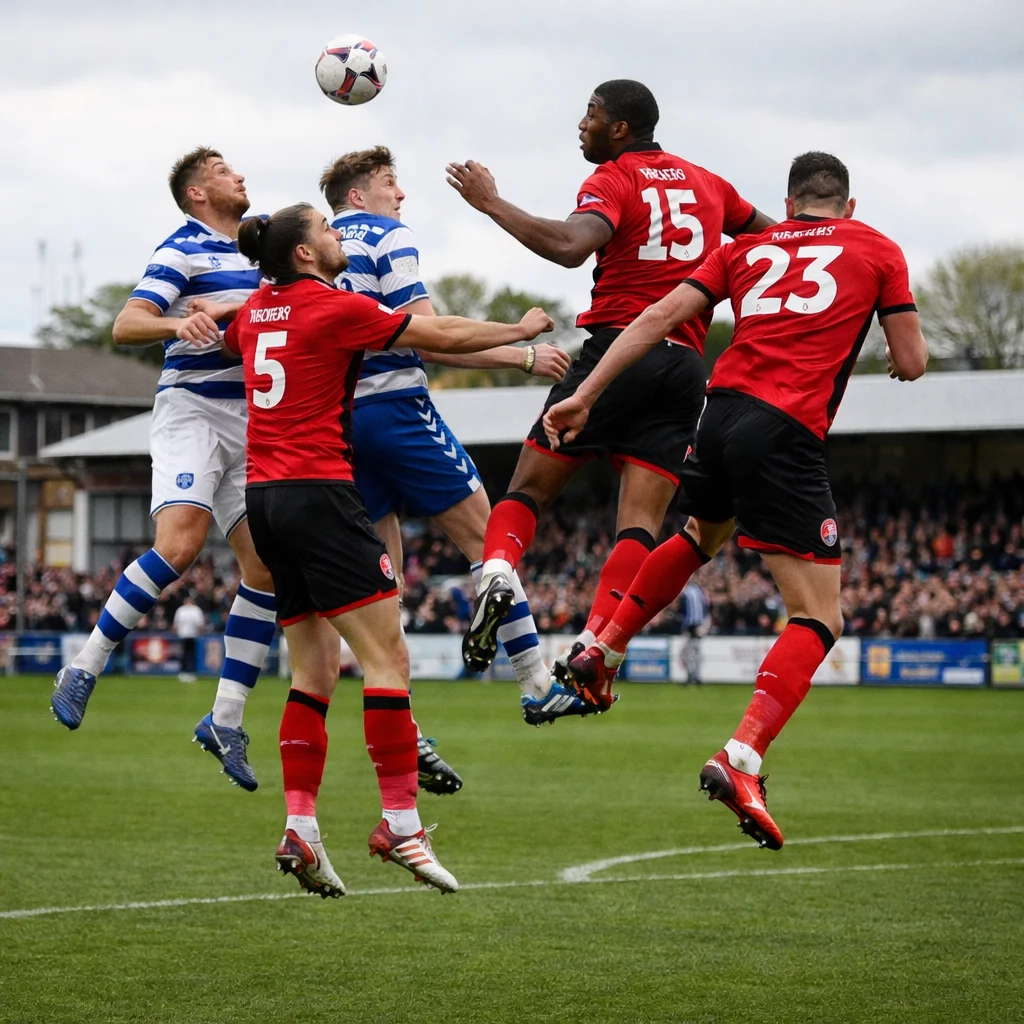
Set-piece football matters more in lower leagues because direct play creates more corners and free kicks. These situations concentrate players in small areas where pushing, pulling, and holding generate fouls that sometimes draw cards. Matches between teams strong at set pieces often produce cards during and around dead-ball situations at rates higher than open-play equivalents.
Practical Lower League Strategy
Team news matters particularly for lower-league card betting because squad depth is limited. When key aggressive players are absent, team card profiles can shift noticeably. Unlike Premier League clubs that replace like-for-like from strong squads, lower-league teams might field substantially different approaches when injuries or suspensions affect regular starters. Verify lineups before finalising lower-league card positions.
Fixture congestion affects lower-league teams more severely than Premier League clubs because smaller squads struggle to maintain intensity across packed schedules. Midweek fixtures sandwiched between weekend matches might see reduced intensity and therefore reduced cards, or might see fatigue-driven mistiming that increases fouls. Consider fixture placement when assessing lower-league card expectations.
Live betting on lower-league matches becomes more viable when matches are televised or streamed, which happens more frequently now than in previous years. When you can watch League One or Two matches live, the information advantage over bookmakers increases because their resources focus on higher-profile fixtures. In-play lower-league card betting rewards those with actual match access.
Building Lower League Expertise
Specialisation accelerates learning when approaching lower-league card betting. Rather than spreading attention across three divisions plus Premier League, focus intensively on one competition initially. The Championship offers the best balance of market access and inefficiency for most bettors—fixtures are widely available, but pricing isn’t as refined as Premier League markets. Once you’ve mastered Championship card dynamics, expansion to League One or Two becomes more manageable.
Tracking lower-league matches requires commitment that casual bettors won’t provide. Watch matches when possible, follow fan accounts and local media for team news, and maintain your own records of referee performances and team discipline patterns. This information advantage compounds over time, eventually creating genuine expertise that bookmakers cannot easily replicate because their resources focus on higher-profile competitions.
Seasonal patterns in lower leagues differ from top-flight equivalents because fixture scheduling varies. The winter period produces challenging playing conditions that affect lower-league football more than Premier League matches played on superior surfaces. Late-season fixture compression as leagues catch up on postponed matches creates fatigue-driven fouling. Understanding these seasonal dynamics helps adjust card expectations across the lower-league calendar.
English lower leagues offer card betting’s clearest market inefficiency case because bookmaker attention decreases faster than match predictability. Championship, League One, and League Two football produces consistent patterns that careful analysis can exploit. Invest the research effort that bookmakers don’t, build lower-league referee and team profiles, and you’ll find value opportunities that Premier League-focused bettors miss entirely. The edge exists precisely because most bettors ignore these competitions—your willingness to engage where others won’t creates the sustainable advantage that makes lower-league card betting worthwhile.
Enjoy stable extra income with card bet.
